Concrete Patios Built by Local Providers
A patio is the floor of your outdoor room, and like any floor it needs a steady base. In older neighborhoods, that base may hide old slabs, buried steps or soil that shifted long ago. A patient look at the ground comes first.
Nomerecopyright Concrete is a referral service. We do not pour concrete ourselves. We connect homeowners in the Scandia area with independent local providers who handle new patios, from plain broom finishes to stamped designs. This page explains the steps, the timing, the finish choices and the questions worth asking, so your first conversation with a provider feels easy.
Planning a New Patio Before the Weather Turns
Concrete behaves a lot like bread dough. It needs the right temperature to set well. In the Scandia area, cold winters and hot, humid summers leave only certain windows that suit a pour.
That is why the early chat matters. A provider with an open calendar can give you more choices than one who is booked solid.
Pour with the Season
Deep frost can lift a fresh slab from below. Strong summer heat can dry the top before the inside is ready. Spring flooding can leave soil too soggy to work. Ask a local provider which weeks look ideal for your yard.
Why Homeowners Choose Concrete for Patios
Think of a patio as a rug that never blows away. Concrete gives chairs, grills and planters a firm, level spot. It fits bungalows, ranch homes and frame houses that have stood for many decades.
It also takes many looks. You can keep it plain, add color, or press in a pattern.
Know the Ground Before You Pour
Old house, slow look. Older lots often hold surprises, such as a buried slab, a filled-in stair, thick roots or soil that was packed down decades ago. Checking the ground first is like testing a wall before you hang a heavy shelf.
Old Slabs and Past Patch Jobs
Sometimes an aging slab or an old patch sits where the new patio will go. A provider may remove it, or they may build over it if it is sound. Either way, ask them to explain the choice in plain words.
What a New Patio Project Includes
Every provider works a little differently, but most jobs follow a familiar path.
- Marking the outline and checking where water will run.
- Digging out the old surface and shaping the soil.
- Laying a compacted gravel base.
- Setting forms, and often steel or wire mesh.
- Pouring, smoothing and cutting joints.
- Curing the slab while it hardens.
Why the Base Matters
A base is like the foundation of a bookshelf. If it is uneven, everything above it leans. Good compaction helps the slab stay flat through many frost cycles.
Sizing Your Patio
Patios often feel smaller once the furniture arrives. Try a simple test. Set your table and chairs on the lawn, then add room to pull the chairs out and walk around them.
Think about the grill, a fire pit and where guests will walk. A slightly larger slab usually costs less per square foot than adding a second pour later. Concrete flatwork is hard to widen once it has cured.
Finish Options
The finish is the outfit your slab wears. It changes the look and how it feels underfoot.
Broom, Smooth and Exposed Aggregate
A light broom finish gives grip when the surface is wet. Exposed aggregate shows small stones for a rugged look. Smooth troweled concrete can turn slick, so it is less common outdoors.
Stamped Concrete Patios
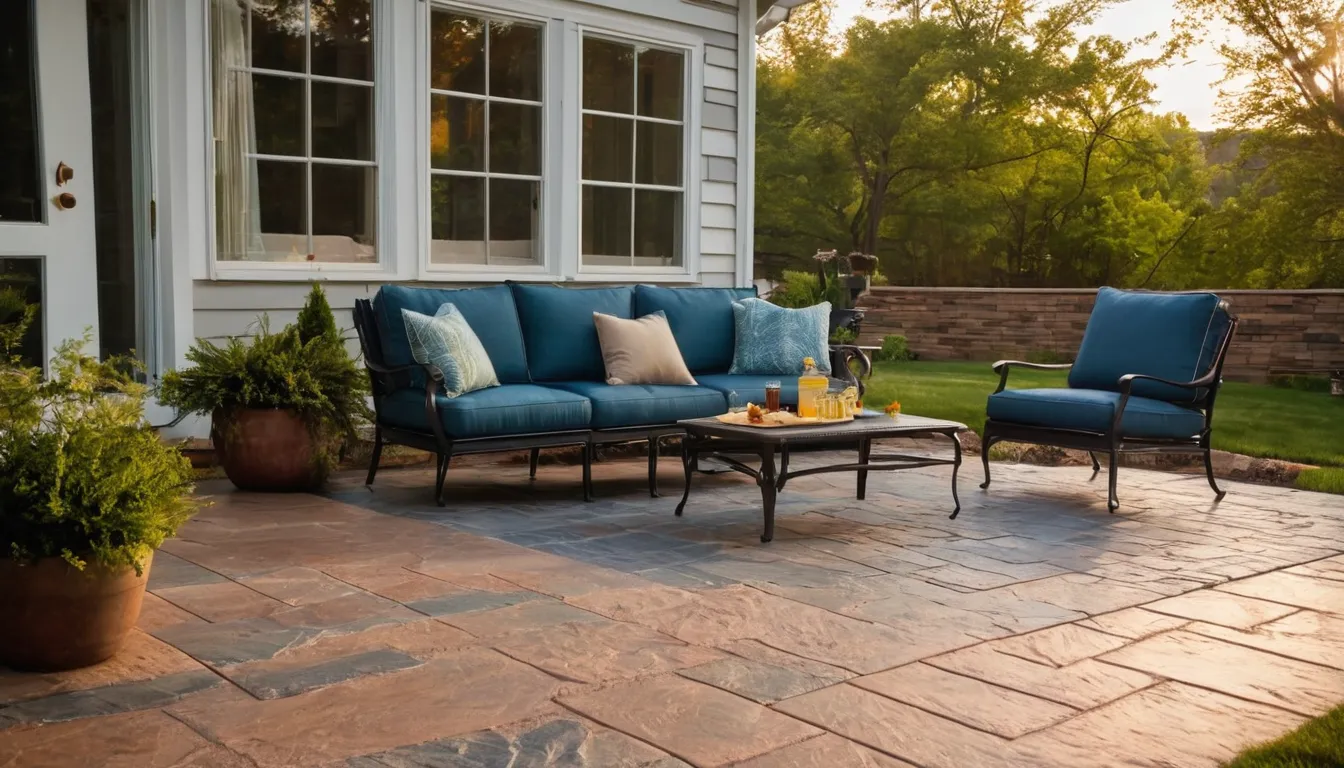
Stamped concrete patios work like a cookie cutter pressed into dough. While the surface is soft, a provider presses in patterns that mimic brick, slate or stone. Color is added for depth. Many homeowners like this look beside older brick homes.
Drainage and Your Foundation
Water is like a shopper who always takes the easiest path. If the patio tilts toward the house, it will walk right to your basement wall. Many homes here have full basements with sump pumps, so the slope matters.
Providers often aim for a gentle fall away from the house. They also think about downspouts, window wells and spring runoff.
When Cracks Appear Near the House
If you already see wall cracks or damp basement corners, foundation repair experts are a different trade. A patio provider can point out what they notice, but a separate specialist should look at the structure first.
Storms, Hail and Winter Salt
A patio needs a rain jacket. Many providers use air-entrained mix, which holds tiny air pockets that give frost room to expand. A sealer adds another layer against moisture and winter salt. Hail rarely harms cured concrete, but it can dent nearby furniture and plants.
Choosing a Concrete Provider
A good provider answers questions without hurrying you. Ask about their experience with older yards. Ask for a written quote that lists the base depth, thickness, finish and what happens to the old material. It is also fair to ask about their own license and insurance where required locally.
If your driveway also needs concrete driveway repair, mention it, since the same provider may be able to look at both.
Caring for Your New Patio
Fresh concrete is like a cake that is still cooling. Keep heavy loads off until the provider says it is ready. Water the surface or cover it as directed during curing.
After that, sweep often and rinse spills. Use a gentle de-icer rather than harsh salt in the first winter. Reseal every few years, as your provider suggests.
Ready to Talk It Through?
Request a callback to ask about provider availability for your season and your yard.
What's Included
Layout and Grade Check
The provider marks the outline and studies how rain will flow so water leaves your house.
Digging and Base Work
Old surface and loose soil come out, then a compacted gravel base goes in.
Forms and Pouring
Forms hold the shape while concrete is poured, leveled and cut with joints.
Finish and Curing
Your chosen texture is added, then the slab cures slowly before use.
Typical Concrete Patio Price Ranges
Patio prices vary by size, soil, access and finish. These are typical U.S. ranges only. Older yards may add removal or base work, so always get a written quote from the provider.
| Item | Typical range | Notes |
|---|---|---|
| Basic broom-finish patio | $6 – $12 per sq ft | Plain, durable and common |
| Stamped concrete patio | $12 – $22 per sq ft | Pattern and color add labor |
| Exposed aggregate finish | $8 – $18 per sq ft | Stone texture, good grip |
| Old slab removal | $2 – $6 per sq ft | Depends on thickness and steel |
| Grading and gravel base | $1 – $4 per sq ft | Soft or wet soil costs more |
| Sealing | $1 – $3 per sq ft | Often repeated every few years |
How It Works
Share Your Plans
Describe your yard, house age and the size or style of patio you want.
Talk With a Provider
A local provider asks questions and may visit to look at the ground.
Compare Written Quotes
Review base work, finish, timing and removal of any old concrete before deciding.
Schedule With the Season
Pick a pour window that suits frost, heat and your own calendar.
Why Call Nomerecopyright Concrete
Patience with Older Yards
Old slabs, past patches and odd soil get a slower look before any pour.
Seasonal Timing
Frost, heat and storms shape the ideal weeks, so planning early helps.
Independent Providers
Local providers do the work. Nomerecopyright Concrete simply helps you find them and compare.
Plain Answers
Sizing, finishes and drainage are explained simply, so you can ask clear questions.
Other Services
Need concrete patios in Scandia?
Planning a new driveway or patio? Call or send a request through the form, and Nomerecopyright Concrete will point you toward a local provider in our network.
No obligationConcrete Patios FAQ
How long does a new concrete patio take to cure?
Concrete usually hardens enough for light foot traffic within a few days, but full strength takes about four weeks. Your provider will say when furniture and heavy items can return. Cool or damp weather can slow curing.
Can a concrete patio be poured next to an older house?
Yes, in most cases. A provider checks the soil, existing slabs and slope first, because older yards can hide surprises. The patio should slope away from the walls so water does not collect near the foundation.
Are stamped concrete patios harder to maintain?
Not much harder. Stamped concrete patios need regular sweeping and a fresh sealer every few years to protect color and pattern. Ask your provider what product suits your climate and what schedule they suggest.
Request a callback
Planning a new driveway or patio? Call or send a request through the form, and Nomerecopyright Concrete will point you toward a local provider in our network.
No obligation